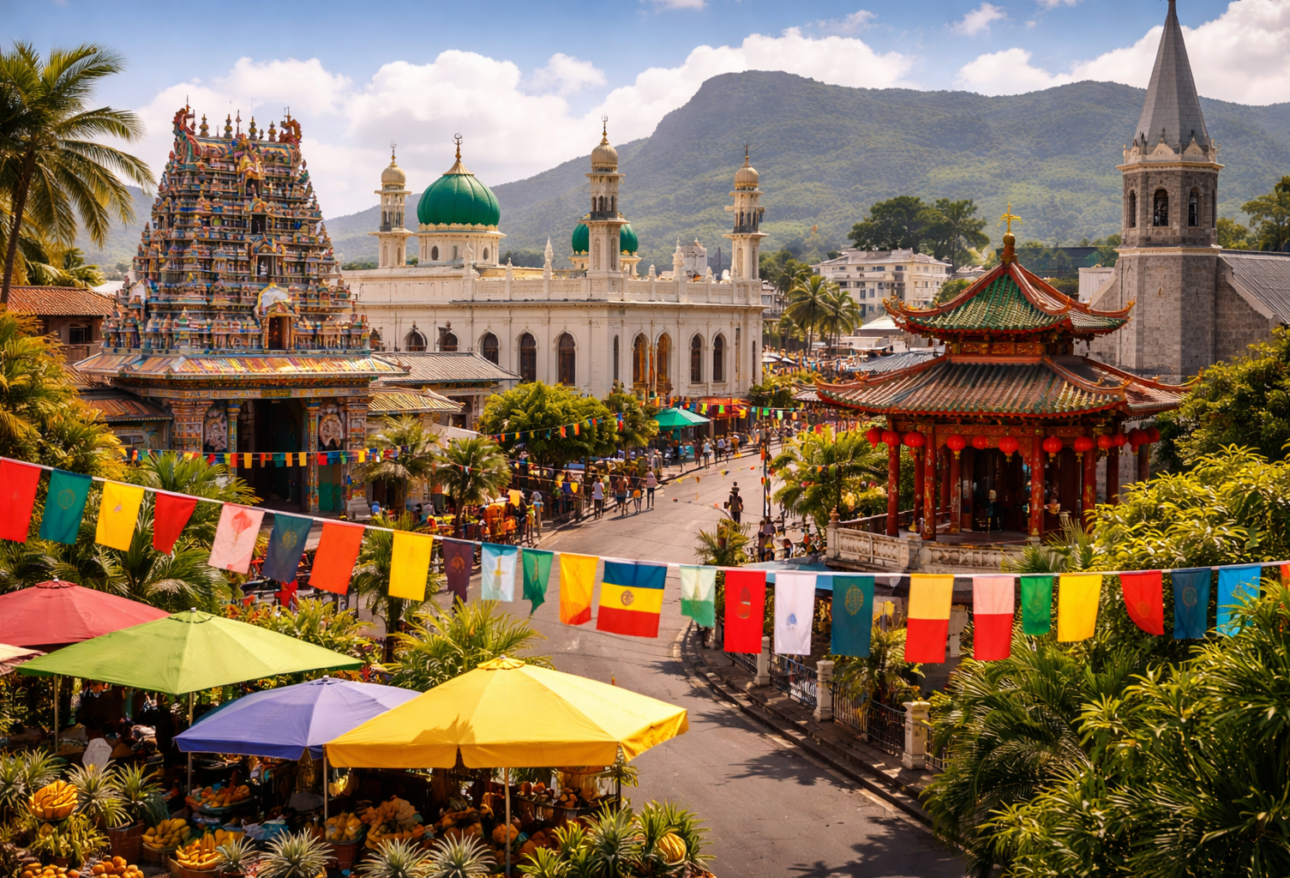

Mauritian culture is the result of centuries of shared history. Descendants of African slaves, Indian indentured labourers, Chinese traders, and European settlers have all shaped the island’s identity. Rather than blending into a single dominant culture, Mauritius celebrates its diversity, allowing each community to preserve its traditions while contributing to a shared national spirit.
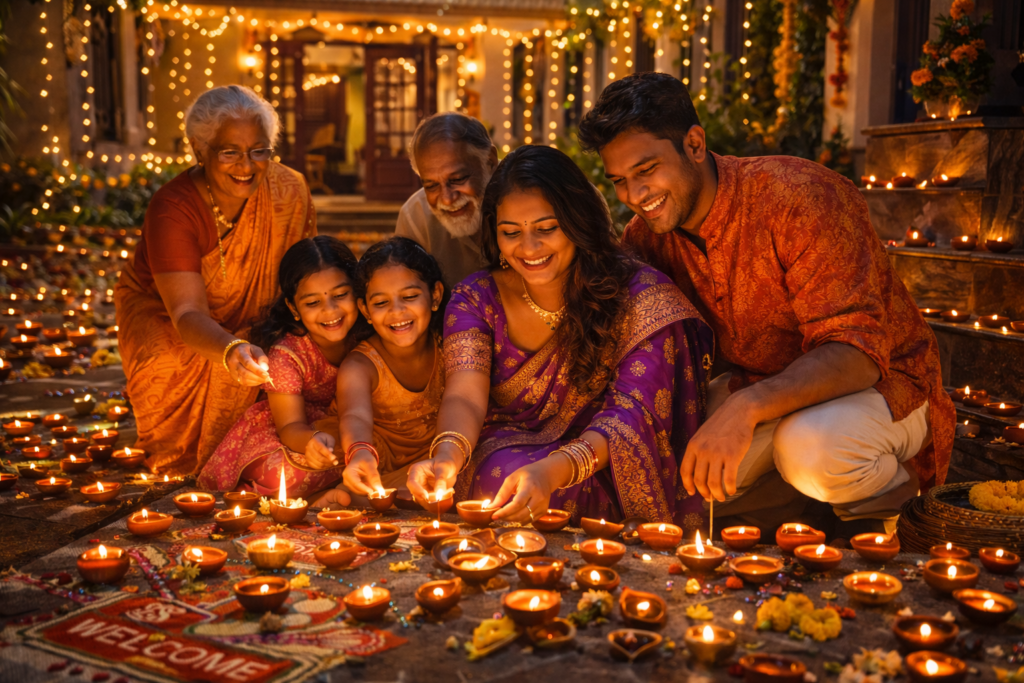
Festivals play a central role in Mauritian life and are celebrated not only by specific communities, but often by the entire nation. Diwali, the Hindu festival of lights, transforms the island into a sea of glowing lamps and shared sweets, symbolizing hope and renewal. Cavadee, a deeply spiritual Tamil festival, is marked by colourful processions, devotion, and acts of faith that leave a lasting impression on visitors.
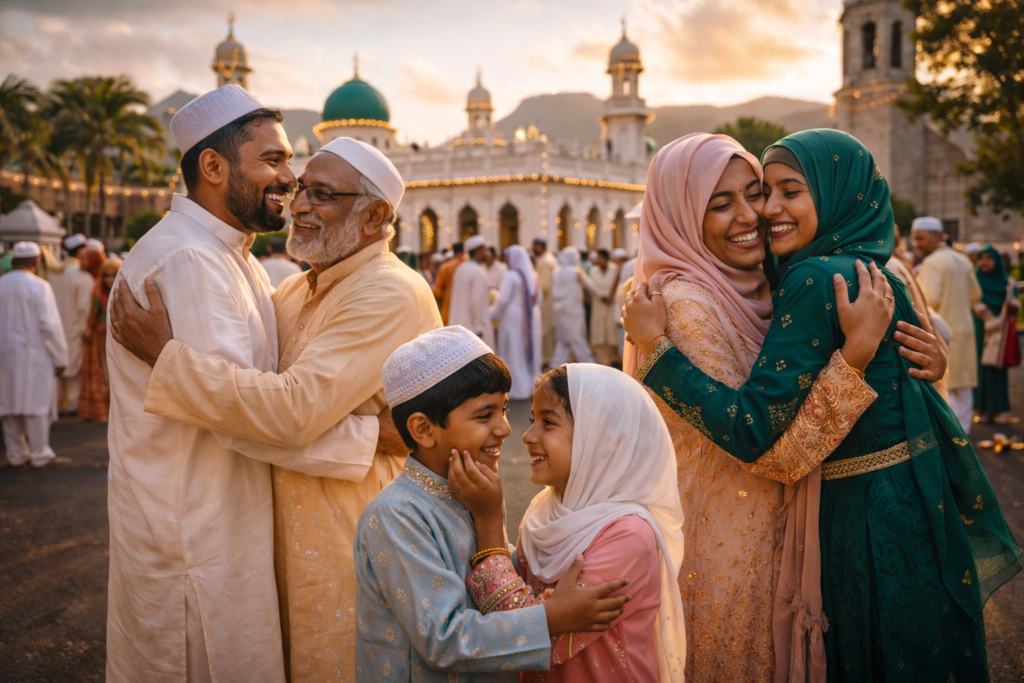
Islamic celebrations such as Eid-ul-Fitr and Eid-ul-Adha highlight values of generosity, family, and gratitude, while Christmas is widely celebrated across the island, regardless of religion. The Chinese New Year brings vibrant lion dances, firecrackers, and red decorations, especially in Port Louis’ Chinatown, creating an atmosphere of joy and prosperity.

What makes these festivals truly special is the spirit in which they are observed. Mauritians often participate in and respect celebrations beyond their own faith, reflecting the island’s deep-rooted culture of tolerance and unity. It is not uncommon for neighbours of different backgrounds to exchange food, greetings, and blessings during festive periods.
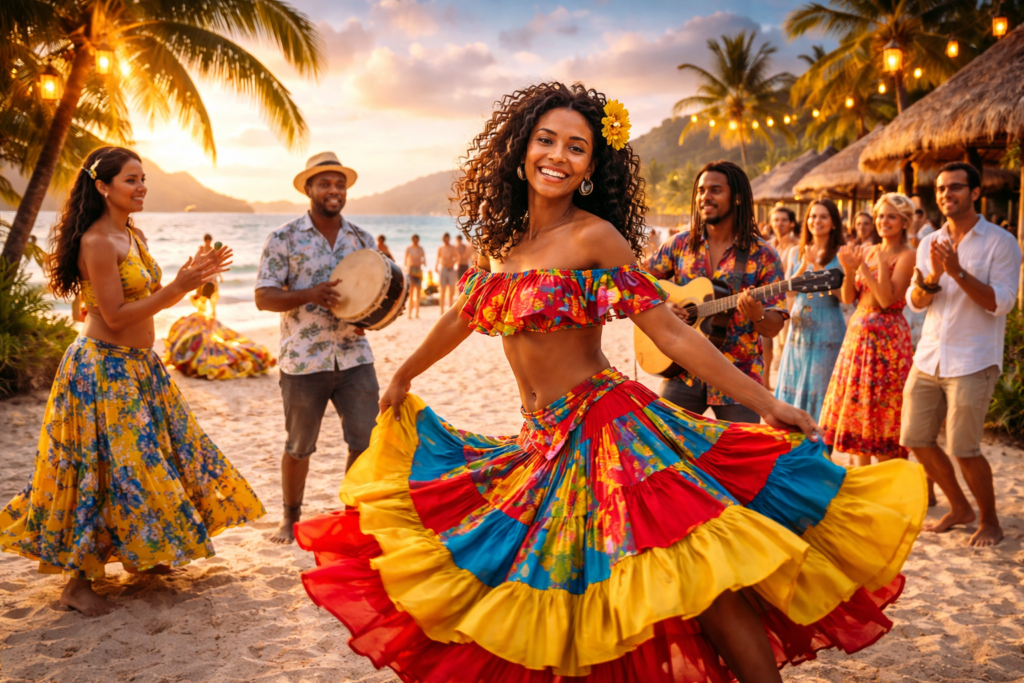
Everyday traditions are equally rich. Music and dance are deeply ingrained in Mauritian culture, with Sega — the island’s traditional music and dance — standing as a powerful symbol of resilience and freedom. Performed to rhythmic drumbeats, Sega tells stories of history, emotion, and identity, often danced barefoot in joyful celebration.
Language also reflects Mauritius’ cultural depth. While English is the official language, French and Mauritian Creole are widely spoken, along with Bhojpuri, Hindi, Tamil, Mandarin, and more. This multilingual environment adds colour to daily life and strengthens cultural bonds.
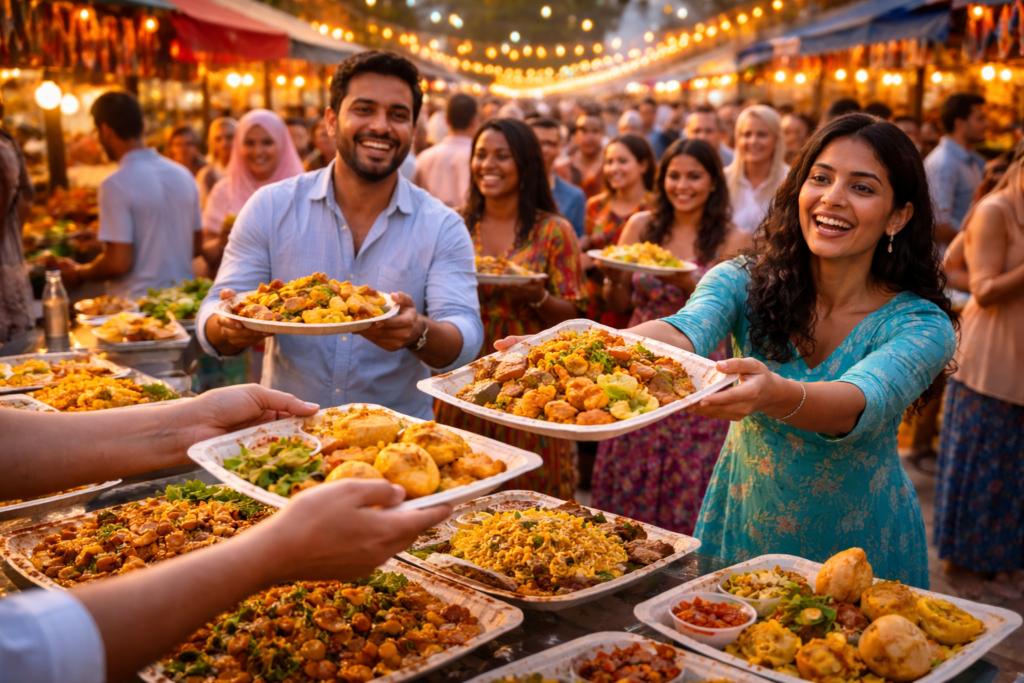
Food, too, is an essential cultural expression. Meals are often shared communally, especially during festivals, with dishes passed down through generations. Cooking is not just about nourishment — it is about storytelling, heritage, and togetherness.
To experience Mauritian culture is to experience warmth, openness, and a genuine sense of belonging. Traditions here are not performed for tourists — they are lived, cherished, and shared. For travelers, this cultural authenticity is what transforms a holiday into a meaningful journey, leaving memories that linger long after the trip ends.